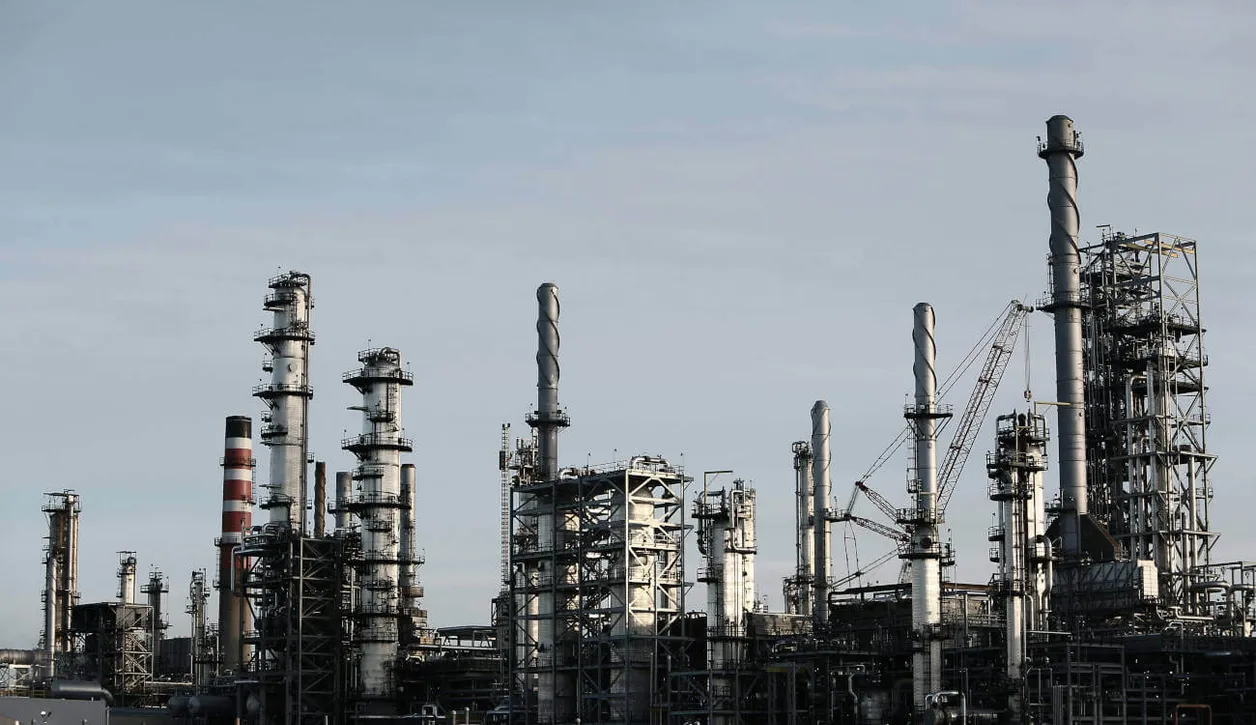
Oil refineries, natural gas producers and related industries use a multitude of NORIT® activated carbon products. Our well-proven grades purify various hydrocarbon streams, resulting in high quality products. NORIT® activated carbons also purify process chemicals before their re-use, making them more efficient and reducing costs.
Here are some of the primary applications where NORIT® provides essential assistance:
Acid gas removal units (AGRU) and glycol dehydration processes
NORIT® has served natural gas plants, refineries, and industrial chemical processors for decades to solve challenges related to amine and glycol scrubber liquids purification.
In AGRUs, sour gases are purified by extracting H2S and CO2sub> in amine scrubber towers. The amine solution is regenerated and continuously recycled. It becomes polluted by hydrocarbons and heat stable salts resulting in foaming, efficiency losses, and corrosion issues.
In glycol dehydration units, moisture is removed from gases by glycol, which is also recirculated and re-used continually. The glycol becomes contaminated with hydrocarbons and other impurities, which causes foaming, fouling, and high glycol replacement costs.
The preferred solution in both amine and glycol purification systems: our dedicated PETRODARCO® and NORIT® activated carbon products. The impurities include large molecules or emulsions that are slow to diffuse or even blind smaller pores. To deal with them, NORIT® has developed grades with a well-tailored “open” mesopore structure. They also feature a good mechanical strength to minimize fines formation and are free of impurities that could cause unwanted degradation.
Mercury removal
Mercury is a toxic metal that is present in many natural gas and refinery streams. It needs to be removed consistently to very low standards, as it is harmful to:
- the environment
- the food chain
- chemical processes
- process equipment
For mercury removal from gases, sulfur impregnated NORIT® RBHG is a well-proven solution. Our proprietary impregnation process is designed to yield an ideal distribution of sulfur in the carbon’s pore structure. There, the sulfur reacts with mercury and immobilizes it inside the carbon particles.
For mercury removal from liquid hydrocarbons, NORIT GAC 830 HG is especially effective. This carbon is impregnated with a specific loading of an iodide salt. Combined with its pore size and particle size distribution, this makes NORIT GAC 830 HG especially suitable for this application.
Hydrocarbon sweetening catalyst support
Mercaptans in kerosene (jet fuel) and other refinery products lead to corrosion, odor, and other issues. These mercaptans are made harmless by oxidative conversion into disulfides. This “sweetening” process requires a metal complex catalyst supported on activated carbon
DARCO® MRX is made specifically for the hydrocarbon sweetening process, where it has become the industry standard. DARCO MRX has a very high meso-porosity allowing a high take-up of catalytic salts and fast kinetics of the catalytic conversion.
Liquid hydrocarbon purification
Natural gas liquids and field condensate purification: To meet NGL’s pipeline specs, gas processors use our PETRODARCO® MS to remove heavier hydrocarbons, resins, and asphaltenes. This high-performance activated carbon also removes H2S, mercaptans and other sulfur bodies providing increased value.
HPNA removal in hydrocracking units: Higher polynuclear aromatics (HPNAs) occur as a result of hydrocracking, and they cause coke formation, deactivation of catalysts, equipment fouling and reduced product yields. NORIT® activated carbon products (NORIT GAC 830 and GAC 830W) adsorb and eliminate HPNAs. These NORIT GAC products are coal-based carbons with a flat internal surface which is ideally fit to adsorb the large, flat HPNA molecules.
Hydrocarbon purification for lubricant oils ingredients, waxes, etc.: NORIT® activated carbons (granular and powdered) are also used to purify specialized refinery products by removing polycyclic aromatics or color bodies.
Vapor recovery
Gasoline storage tanks contain a headspace of air saturated with hydrocarbon vapor. As tanks are filled that vapor space requires venting, but to avoid pollution it can not be released into the atmosphere.
The solution is our SORBONORIT® K pelletized product series. SORBONORIT grades are available with a variety of pore structures and total pore volumes to fit specific application needs.
Where vapor pressure is low, or volumes are small, the saturated carbons are usually just replaced (and optionally re-activated at a NORIT® site).
With higher vapor pressure and/or larger volumes, it is more economical to use a vacuum process that desorbs the vapors from the carbon which can then be reused. The desorbed vapor is condensed and recycled.
Power, steel, cement
Flue gas that needs to be purified is what power, steel, and cement plants have in common. In flue gas purification, NORIT® has played a pioneering role from the 1980’s: first in the removal of dioxins in Europe, and then the removal of mercury and THC in the US. Our wealth of experience positions us well to support customers facing existing or new legislation.
Major NORIT® and DARCO® activated carbon applications are the removal of mercury and/or dioxins at:
Power plants
Coal fired power plants’ flue gas contains traces of mercury. Mercury is extremely toxic and therefore an increasing number of countries (including the US, Canada, and the European Union member states) pose very stringent limits on mercury emissions.
Treatment with powdered activated carbon (PAC) is a well-established technology to control mercury concentrations in flue gas. As a pioneer in this application, NORIT® has contributed much to make this technology robust and cost effective.
Our DARCO® activated carbon portfolio for mercury removal is the result of decades of development and optimization. What our products have in common is a strongly developed mesoporous structure: to allow fast kinetics of adsorption, as well as a high capacity. This results in a high removal efficiency at low dosing rates. We offer different grades:
- Non-impregnated PAC (various grades), ideal when the majority of the mercury is in the oxidized state
- Impregnated PAC (various grades) removing oxidized and metallic mercury from flue gas
- Special impregnated PAC used in conjunction with Dry Sorbent Injection systems
- Special impregnated ‘sulfur resistant’ PAC for flue gases that contains higher concentrations of acidic gases like SO3sub>
Cement plants
Cement plants’ flue gas can contain mercury and dioxins, their trace concentrations being dependent on the fuel used. Mercury and dioxins are extremely toxic, and several countries have legislation in place to limit their emissions stringently.
Treatment with powdered activated carbon (PAC) is very effective in reducing concentrations of both mercury and dioxins in cement plant flue gas. As a pioneer in this application, NORIT® has contributed much to make this technology robust and cost effective.
Our DARCO® and NORIT® activated carbon portfolio for flue gas treatment provides the ideal basis for meeting your emission requirements cost effectively. Our activated carbon portfolio is the result of decades of development and optimization. What our products have in common is a strongly developed mesoporous structure: to allow fast kinetics of adsorption, as well as a high capacity. This results in a high removal efficiency at low dosing rates. We offer different grades:
- Non-impregnated PAC (various grades), ideal for removal of dioxins and mercury in the oxidized state
- Impregnated PAC (various grades) removing metallic mercury from flue gas, in addition to oxidized mercury and dioxins
NORIT® engineers are highly experienced in the field of flue gas treatment. We factor in your facility’s parameters such as coal source, combustion efficiency, kiln type, pollution control equipment configuration, contact time, and flue gas temperature.
Equipment: High quality PAC bulk bag dosing systems and technical support are also valued parts of our product portfolio for PAC trials and installations. We also provide technical support for your PAC Silo systems.
Cement plants’ flue gas may also contain hydrocarbons in trace concentrations, and operators may face limits on the Total Hydrocarbon Content (THC) of the stack gas. We have successfully pioneered the use of PAC for THC reduction in cement plants to meet United States regulations.
Steel plants
Dioxins and mercury are present in the flue gases from sintering processes in steel plants. To protect human health and the environment, these highly toxic pollutants often need to be reduced within very stringent limits before the flue gas can be emitted. The European Union member states have stringent legislation in place.
NORIT® powdered activated carbons have been optimized based on our extensive experience. We deploy:
- Physical adsorption in a dedicated pore structure, to capture dioxins and oxidized mercury
- Chemical conversion by impregnated carbons, to convert metallic mercury to oxidized mercury
Our powdered activated carbons bring:
- Excellent dioxin and mercury removal efficiencies
- Right particle sizes for fast kinetics, also suitable for your particulate removal device (ESP/Bag house)
- Oxidation of elemental mercury by brominated activated carbon when needed
Safety characteristics determined per standard test procedures, support our offerings.
New projects will benefit from NORIT’s experience. We can help you selecting the most suitable carbon, supply in the right packaging such as bulk deliveries to your silos, and provide system support for silo, dosing and injection equipment.